Oklo reported a net loss of $105.7 million for 2025, up from $73.6 million in 2024, while operating loss widened to $139.3 million and loss per Class A share reached $0.72.[1] On paper, that is ugly. In a normal industrial story, the market would punish it. Instead, shares moved higher Tuesday as investors focused on something else entirely — approvals, cash, and the dream that AI-driven power demand will eventually make next-generation nuclear look less speculative and more inevitable.[2][3]
That is the hook. Oklo has no revenue from power sales. No reactor built. No binding power purchase agreement to deliver electricity or heat. Yet the stock still trades on future scarcity value, not current economics.[1] This is not a cash-flow story. It is a permission-to-build story.
The market is looking past the red ink because the cash pile is real
Losses are rising, but so is the runway
By year-end 2025, Oklo held $788.4 million in cash and cash equivalents plus $624.1 million in marketable debt securities, giving it roughly $1.41 billion in liquidity.[1] That is the part bulls care about. The company also said net cash provided by financing activities was $1.26 billion for the year.[1] So yes, the losses are widening — but the runway is long enough for investors to keep betting on execution.
Management expects 2026 cash used in operating expenses of $80 million to $100 million and cash used in investing activities of $350 million to $450 million.[1] That is a meaningful burn rate. Still, the market seems willing to absorb it because this company is not being valued on near-term earnings. It is being valued on the chance to secure one of the first meaningful positions in advanced nuclear power and isotopes before large revenue begins.
The approvals matter because they reduce one layer of risk — not all of them
Oklo got milestones. It did not get certainty
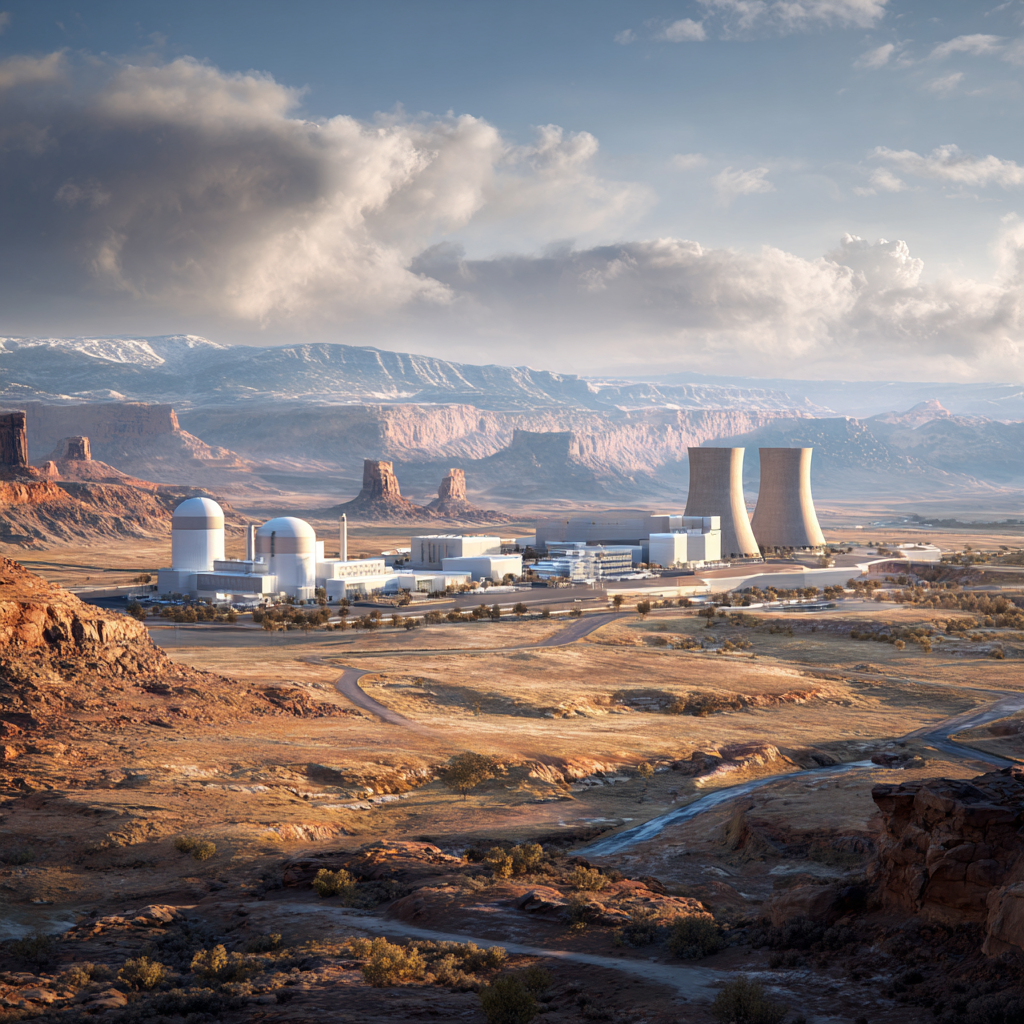
Oklo said the Department of Energy approved the nuclear safety design agreement for Aurora-INL at Idaho National Laboratory under the Reactor Pilot Program.[2] Separately, Atomic Alchemy, its subsidiary, announced DOE approval for the Groves Isotopes Test Reactor safety design agreement in Texas, while also receiving its first NRC materials license, allowing it to handle and ship isotope material from Idaho and begin initial commercial sales activity.[3]
That is why Texas Capital Securities reiterated its Buy rating and $138 price target, calling the developments “important milestones” that help de-risk the isotope business and Aurora path.[4] Fair. But “de-risk” is not the same as “de-risked.” Oklo still depends on additional regulatory approvals, fuel access, construction execution and customer conversion.
The AI power narrative is real — but the commercial proof is still thin
Reuters reported U.S. power demand is projected to hit record highs in 2026 and 2027, partly because of AI expansion.[5] Oklo is clearly trying to ride that wave. Its filing references non-binding LOIs with Equinix, Diamondback Energy and Prometheus Hyperscale, a 12-gigawatt master power agreement with Switch, and a prepayment agreement with Meta tied to a 1.2-gigawatt Ohio data-center power campus.[1] It still targets 2028 for its first powerhouse deployment.[1]
But the filing also spells out the risk in plain English: HALEU fuel is scarce, expensive, and not yet available at reliable commercial scale in the U.S..[1] That is the part speculators prefer to ignore.
Oklo won the day because permits moved forward.
It will only win the long game if execution catches up to the valuation.
Sources
[1] SEC — https://www.sec.gov/Archives/edgar/data/1849056/000162828026018698/oklo-20251231.htm
[5] Reuters — https://www.reuters.com/business/energy/us-power-use-beat-record-highs-2026-2027-ai-use-surges-eia-says-2026-03-10/